The Atlantic: Inside an After School Program for Refugee Children
An article by Tanvi Misra and CityLab.
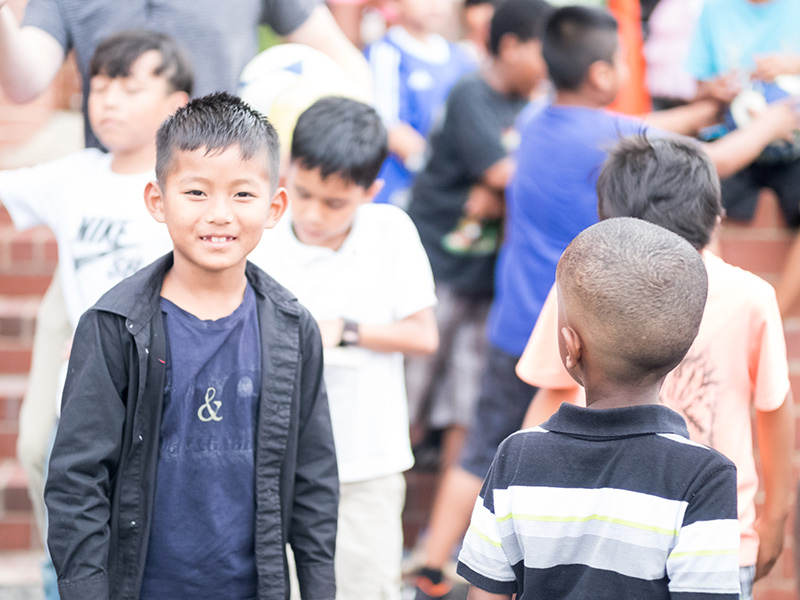
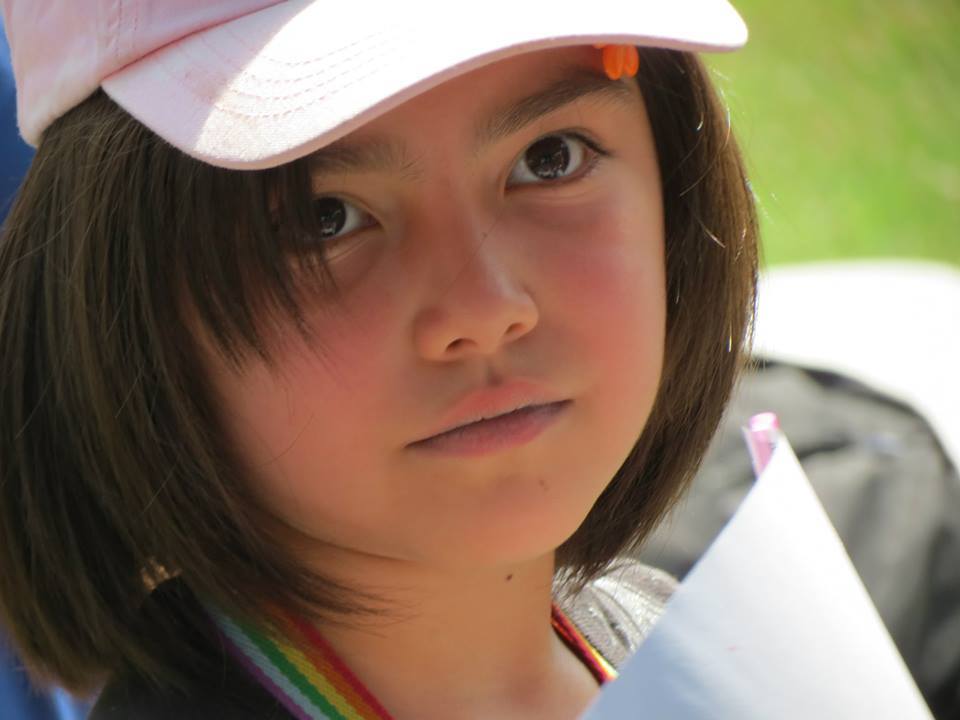
The first thing I noticed about Sil Ganzo was her warm smile. It stayed put as the 33-year-old showed several journalists, myself included, around the center where she runs an after-school program, OurBRIDGE, for new arrivals to America. Roughly 70 kids from 20 countries, from kindergarten to fifth grade, pour into the center after school in waves. Most are refugees from countries like Nepal, Burma, Iraq, Afghanistan, Somalia, El Salvador, and Honduras.

ourBRIDGE named Charlottean of the Year 2014

ourBRIDGE after school featured in Youth Today
ourBRIDGE in Charlotte, North Carolina, is one of a kind. It serves over 70 refugee and immigrant elementary school aged children. These children hail from countries such as Nepal, Bhutan, Burma, Vietnam, Iraq, Gambia, Mexico, and more. The staff members are almost as diverse as the children, as many of the after school tutors are from countries such as Scotland, Argentina, Bhutan, Brazil, Indonesia, Ecuador and the USA.
A typical day at ourBRIDGE begins at 3 p.m. It is "all hands on deck" as soon as the doors open. Children begin by working on the Problem of the Day, a math word problem aligned with the North Carolina Common Core Standards. An important part of our English Proficiency program, the problems are relevant to what each grade is working on in school. Because they are word problems, the students not only need to understand the math, but they also need to understand the English, which is explained by our tutors.
Students also write in their journals. Each journal entry is based on a specific topic designed by our tutors, and its aim is to improve English written communication skills. Students are then fed delicious, healthy food which is appropriate to specific cultural and religious diets.
At 3:50 p.m., it is time for "Whole Group." This is a small assembly for all the children from Kindergarten to Grade 5. I lead the group along with Andrew Eastwood, the Program Director, who taught English as a second language for ten years in South East Asia and South America.
Our first activity "Stars of the Day," is the children’s favorite. Each tutor has the opportunity of awarding a star to one of the children. This accolade can be given for success in an academic endeavor or for showing kindness, respect or compassion on any level. Next, "Hearts of the Day.” This is equally as popular. Here the children can choose another child who has shown an act of kindness towards them.
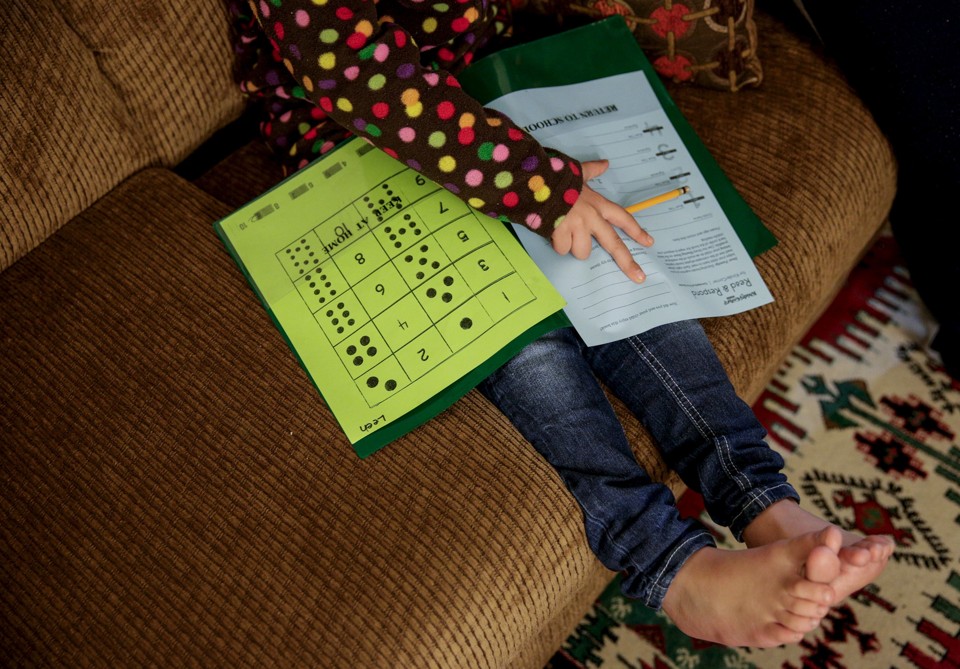
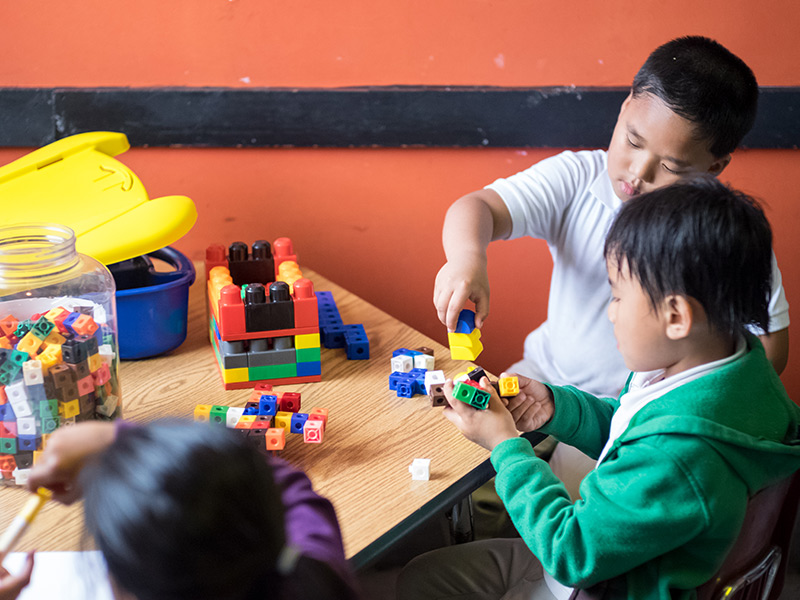
After Whole Group, the children work on homework. Homework is a top priority, as most of the children have no access to computers or assistance at home as their parents rarely speak English. Once the homework is completed, tutors lead small groups through fun, hands-on projects that range from STEAM (Science, Technology, Engineering, Arts and Math), to anti-bullying approaches and other activities designed to increase children’s confidence and self-esteem. Activities are often planned around holidays and cultural celebrations, and are designed to support English language acquisition.
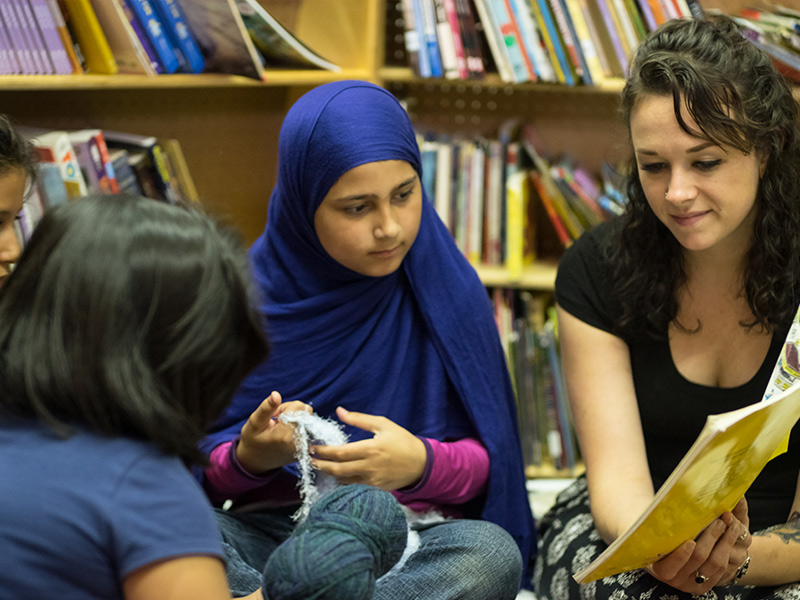
On Wednesday the tutors lead an activity which involves both reading comprehension and a hands-on activity. For example, the students will read a short passage on weather and cloud formation. After reading, which involves recognizing new vocabulary, and answering comprehension questions, the students make a cloud of their very own using glass jars, water, and a match (tutors do this part!). After completing the activity, each group participates in a discussion. Much of the English acquisition at ourBRIDGE is through practical activities and talking about what we have learned.
See the full article here: http://youthtoday.org/2014/11/ourbridge-afterschool-program/

The Charlotte Observer: New After School Effort Aids Immigrants
Charlotte has a new nonprofit dedicated to helping the fast-growing immigrant community acclimate to a new nation. OurBRIDGE is an afterschool program for immigrant and refugee children. Organizers say the goal is to provide a place where immigrants can adjust to a new culture, perfect their English and get support to succeed at school and in life. OurBRIDGE also seeks to foster greater awareness of the immigrant community’s many cultures and beliefs. The center at 1350 Central Avenue is currently helping families from more than 20 countries. In addition to donations, it is seeking volunteers.
YOUTH TODAY: Relaxed, Hands-on Activities at OurBridge Give English Learners the Practice They Need
Imagine entering a school where you don’t speak the language and you don’t know the culture. It’s an experience shared by nearly 4.4 million students in the United States. Slightly more than 9 percent of all students in U.S. public schools are enrolled in English language learning programs, according to the 2013 Digest of Education Statistics.
Many of them get very little time to speak and practice the new language. The national average for English language learners is only a minute-and-a-half of classroom talk time, according to an Afterschool Alliance brief on English learning.
OurBridgeA Charlotte, N.C., nonprofit afterschool program, OurBridge, steps into the gap, providing direct instruction along with fun activities for interaction and practice.
Founder Silvia Ganzo sees kids who are silent in school come alive after school.
“The best way for the kids to learn is hands on —doing, feeling, seeing, going,”she said.
A strength of OST programs like OurBridge is that they are able to provide a low-pressure environment in which kids can feel comfortable experimenting with the new language.
When kids carve Halloween pumpkins at OurBridge, they estimate and measure circumference and play with counting and sorting the seeds.
Youth Today Out of School Time hub afterschool literacy leadership2Find articles and research about language learning on the new Youth Today Out-of-School Time Research and Resource Hub.
When they recently baked apple cinnamon, peanut butter and chocolate chip cookies, they learned fractions and units of measurement while putting ingredients together.
The nonprofit serves 72 children from four elementary schools, Ganzo said. The children come from 18 nations, including Mexico, Honduras, Nepal, Burma and Bhutan.
Ganzo, a native of Argentina, founded OurBridge after working for a tutoring company that ended its afterschool program. She received funding through a 21st Century Community Learning Center grant in August.
Literacy coordinator Linda Lang assesses children’s English proficiency when they arrive in the program. She works one-on-one with those who are new and does small group work with others.
“At school, they don’t get the one-on-one that they need,”Ganzo said. “Some of the kids have just arrived in the country over the summer. “We have a huge range of English proficiency.”
Research shows that several strategies support language acquisition when used alongside each other, according to the Afterschool Alliance brief on language in afterschool programs.
Kids need direct instruction, time to practice the language, “scaffolding”during instruction, parent and community engagement and cultural knowledge.
Kids at OurBridge spend 20 minutes each day getting homework help and 20 minutes reading. Then they turn to a daily hands-on project, which can be science, technology, engineering and mathematics-related.
Kids take field trips to locations such as the library, museums, local parks and fire stations, adding to their understanding of American culture. Art and dance classes are also offered.
“We take the kids out in the community for some volunteering as well,”Ganzo said.
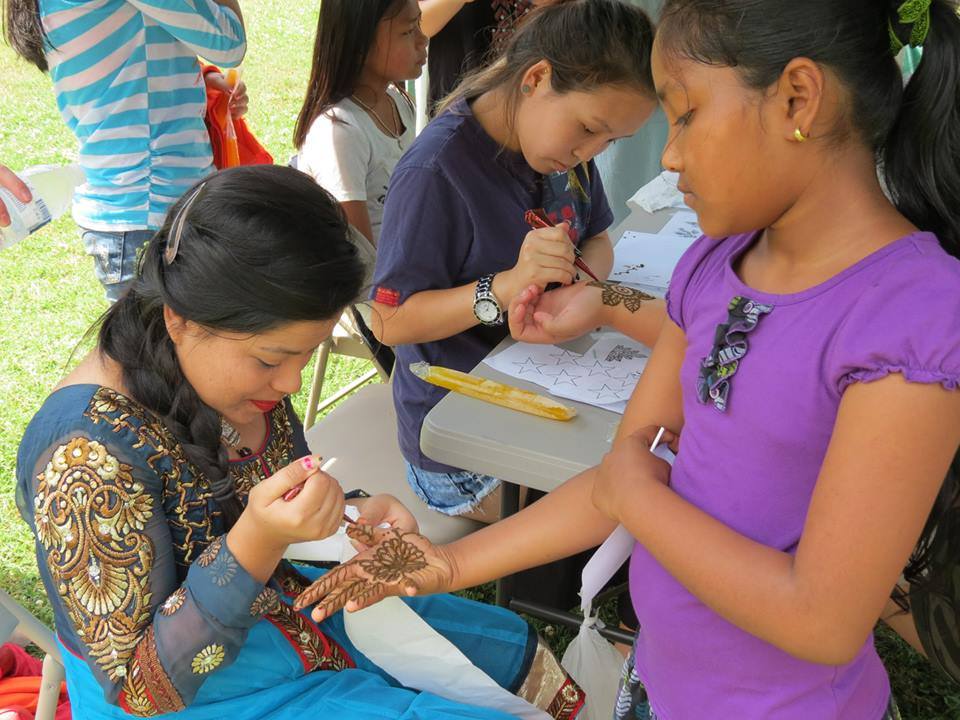
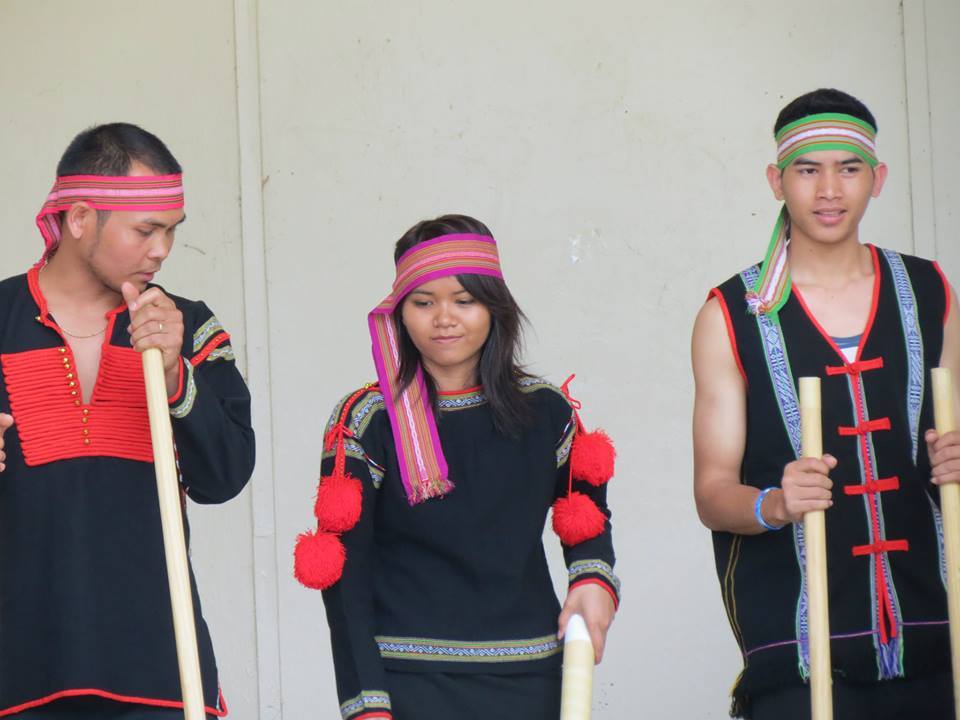
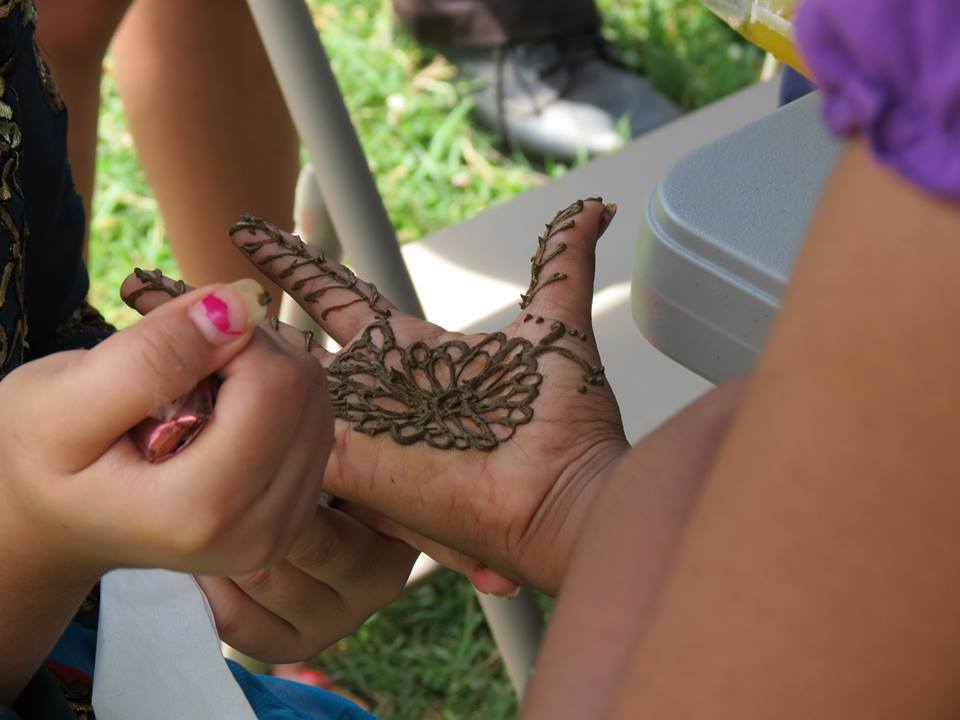
OurBridge is active in the community. Along with five other local organizations it sponsored a festival in honor of World Refugee Day. The festival included traditional dances and songs, a citizenship trivia game and free henna demonstrations.
Engaging children and families in the community helps them integrate, as well as providing language-learning opportunities. It creates a bridge between their own culture and the new one.
Read the full article here: http://youthtoday.org/2014/11/relaxed-hands-on-activities-at-ourbridge-give-english-learners-the-practice-they-need/
The Charlotte Observer: OurBRIDGE Program Offers Classroom Aid to Immigrant Children
On Sept. 29, 70 elementary students sat cross-legged in rows on a blue rug at Our Bridge, a nonprofit after-school program Sept. 29.
Chatter stopped when they spoke in unison with Education Coordinator Linda Lang: “Stop, look, listen.” Then they went over the rules and routine.
The students, in various ways of acknowledgment, agreed: rules matter.
What may seem simple was a big deal coming from immigrant and refugee children learning to speak English.
That’s why Our Bridge Executive Director Sil Ganzó said she was compelled to take over the program after it was shut down last year by her former employer, a for-profit tutoring company.
“I have a passion for education, and I wanted to continue to give these kids a safe and welcoming place to learn,” said Ganzó, who emigrated to the U.S. from Argentina.
Our Bridge is a nonprofit organization that in August received a 21st Century Community Learning Center grant: a federal grant for academic enrichment after-school programs for students who attend high-poverty, low-performing schools.
Our Bridge works with refugee and immigrant students at Winterfield, Merry Oaks and Billingsville elementary schools. The students come to Charlotte from 22 countries, including Nepal, Burma, Bhutan, Mexico, Iraq and Honduras.
The program helps students with homework, provides English-language tutoring and creates an environment where they can learn from others going through the same experience.
Lang directs the English as a second language program. She has 30 years of experience teaching elementary school, special needs and English in Scotland, South Africa, Saudi Arabia and the U.S.
She assesses each student’s language skills, then works with them one-on-one or in small groups to help with homework and engage in language-focused play and conversation.
The classrooms are filled with puzzles and books, and there is a game center with dozens of board games.
The language lessons stick, Lang said, “when they learn by doing and having fun.”
Our Bridge also provides meals and transportation, celebrates cultural holidays and offers weekly learning themes. Through those themes, students engage in community outreach, physical activities, field trips and STEM-based learning.
Program Director Andrew Eastwood talked about a hit project on frog hibernation in which students made edible tadpole-winter hibernation exhibits of whipped cream, blue jello, chocolate pudding and gummy worms.
“The kids loved learning about it and eating it,” Eastwood said.
The Our Bridge program is at 1350 Central Ave. in Charlotte’s Central Square Shopping Center. The center has donated a grassy plot on the lot where the students plan a garden this spring.
Volunteer tutors worked with students at metal tables and chairs in classrooms, separated by brightly colored half-walls dividing them by grades.
Jack Meza, a volunteer tutor who emigrated to the U.S. from Ecuador 10 years ago, said, “When I came here, I didn’t speak English and I pretty much had to teach myself.
“I am here to help these students so they don’t have to face the same challenges I did.”
Phayel Bhagi, also a volunteer tutor, works as a classroom facilitator with Central Piedmont Community College’s Adult ESL program. Bhagi moved to Charlotte from Bhutan five years ago.
“I get energy from their excitement,” Bhagi said of the Our Bridge students, “and I love learning about their different languages.”
Billingsville student Yulissa Rojas Torres,10, attends Our Bridge. “I like the teachers here, and I like being with my friends.
“You have so much fun here,” she said.
Charlotte groups unite to celebrate World Refugee Day
Credited to the Charlotte Observer
Crystal O’Gorman
Correspondent
Posted: Saturday, Jun. 14, 2014
Catholic Charities will join with six local nonprofit organizations, professional agencies and educational boards to host the third annual World Refugee Day Charlotte.
The event consists of a week’s worth of free activities starting June 15 and culminating with a cultural festival at Freedom Park on June 22.
Kailey Otten, coordinator of the event committee, said World Refugee Day takes place yearly on June 20. Otten said the committee’s goal is to raise awareness about refugees in Charlotte and celebrate the rich culture they bring.
Otten, who also is an assistant facilitator for Catholic Charities’ Refugee Youth Program, said Charlotte is home to many refugees, but most are from Bhutan, Myanmar, Vietnam, Iraq, Eritrea, Somalia, Afghanistan, Sudan and Democratic Republic of Congo.
Otten said 150 people attended last year’s festival, which was held at 7th Street Public Market.
Amanda Ingrassia is Central Piedmont Community College’s Refugee Education Specialist and a World Refugee Day committee member. She said she is working with local refugees to develop and present cultural booths for the festival, adding that refugees feel enthusiastic about sharing their heritage.
The committee will have other informative booths to explain what it means to be a refugee, highlight local refugee leaders and business owners, and acknowledge local organizations that support the refugee community.
The festival also offers entertainment with traditional cultural dances and songs. There will be a citizenship trivia game, free henna demonstrations and coloring kits for kids.
Catholic Charities, a nonprofit social services organization that aids the community as an arm of the Diocese of Charlotte, spearheaded a partnership with area businesses and organizations that work with the local refugee population.
The committee includes Carolina Refugee Resettlement Agency, Refugee Support Services, CPCC, Charlotte-Mecklenburg Schools, ourBRIDGE and Mental Health Association of the Central Carolinas. It has worked to create an event that engages the public in conversations about local refugee resettlement and the positive role of refugees in the community.
Sil Ganzó is a World Refuge Day committee member and founder of ourBRIDGE, an after-school program for refugee and immigrant children.
“It is very encouraging to see the different organizations that serve this community come together in an effort to recognize and celebrate the determination and courage of the refugees who are building their lives anew in Charlotte,” he said.
Perry Griffin, a multicultural advocate for the Mental Health Association of Central Carolinas, said: “It is so important that we recognize the richness of our city’s diverse cultures. World Refugee Day is a great occasion for American-born citizens to learn more about these amazing people, their cultures and hear their stories of resiliency.”
After Long Journey, What Refugees Find Upon Arrival
There’s a lot of debate surrounding immigration, but there is one kind of immigration that receives bipartisan support– that of refugees. More than 2,000 refugees resettled in North Carolina last year. We often hear about what refugees have to leave behind – war and persecution – but what is waiting for refugees when they get here?
It can take years of paperwork to come to America as a refugee. Once that is sorted, Rebecca Zanniatnuhma works on those final details that stand between refugees and their new lives. She works at Carolina Refugee Resettlement Agency, sorting out renting and furnishing refugees’ new apartments, meeting them at the airport - and filling the fridge.
Today, Zanniatnuhma is at a supermarket on the east side of Charlotte, shopping for a Burmese family set to arrive in town that evening. Zanniatnuhma is a Burmese refugee herself, and picks out traditional Burmese ingredients so the new arrivals feel at home - at least as much as they can. Her brother lifts a 50-pound bag of rice into the cart, Rebecca picks out vegetables for a Burmese style soup. "For a Chin," she says, "we never finish without a soup."
7 Common Misconceptions About Refugees For World Refugee Day
Thursday, June 20 is World Refugee Day, and while you might have been enjoying a quiet evening at home, dozing on your daily commute, or complaining about your noisy neighbors, take a moment to learn about those whose homes are not so happy. On-going conflict in places like Syria, the Democratic Republic of the Congo, Afghanistan, and South Sudan caused 2012 to count the the highest number of refugees the world has seen in nearly 20 years.
Many stigmas and misconceptions surround refugees. Here are a few:
1. All displaced peoples are refugees
Globally, the UNHCR (UN High Committee on Refugees) estimates that 45.2 million people are currently displaced from their homes due to violence, rights abuses, or persecution. Of that number, about 15 million are refugees, while the remaining 30 million are internally displaced peoples, or IDPs, meaning that they were forcibly displaced from their homes, but never crossed international borders.
2. Most refugees end up in the U.S. or other developed countries
Eighty percent of refugees are in developing countries, leaving only a small minority that are resettled to developed countries like the U.S. or Europe. The vast majority of refugees live in camps in a country neighboring their own.
3. All refugees WANT to leave their home countries behind
A common assumption among Americans is that everyone in the world wants to move to America. Refugees leave behind family members, livelihoods, homes, memories, and traditions when they leave. Extreme circumstances that turn people into refugees, and while all are happy to be out of harm's way, many still long to return home someday.
4. All refugees are resettled to new homes
Less than 1% of refugees are resettled into new countries. Many refugees return to their home countries (either voluntary or forcibly), while others live their entire lives in camps, often in squalid, crowded conditions.
5. All refugees are granted new nationalities
There are 6.4 million refugees living in what the UN calls a "protracted refugee situation." All around the world, there are refugees who have remained stateless for decades and even generations.
6. As a refugee, you are given lots of free stuff
While the UNHCR was set up to provide protection and support for these stateless peoples, conditions in many camps remain appalling. Extreme desperation due to homelessness, hunger, and violence forces refugees to survive in any ways they can. Refugee camps, especially long-term camps, develop into miniature cities, complete with hustling, enterprising youths, elected officials, and patrolling police forces. Hardly leeching off the system, refugees are among some of the most resilient and innovative people.
7. Refugees are safe once they leave their home countries
After escaping danger in their home countries, refugees often face other perils in the countries to which the fled. Some face new forms of persecution and alienation due to their foreign status. Others face the same dangers they fled from, only now more up close. After the 1994 Rwandan genocide, those who fled the violence found themselves living in the same camps as the genocidal leaders and organizers.
So next time you go to complain about the water pressure in your shower, the size of your dorm room, or your grumpy landlord, stop and be thankful you have a home to complain about.